Sunday, 12 April 2009

Render Unto Caesar

Denarius of TiberiusEaster (as previously in this blog) calls for a biblical theme. As I have been thinking about Roman coins recently, what better theme to choose than the "Render Unto Caesar" story.

The story will be well known to you. It is Passover in Jerusalem, and Jesus is at the Temple. His enemies seek to entrap him with an unanswerable riddle: "Is it lawful to pay taxes to Caesar, or not?" They know (as does Jesus) that either a "yes" or a "no" will be fatal, guaranteeing to alienate, on the one hand, the oppressed Jews, on the other, the Roman oppressors. But Jesus takes a third path.

"Bring me a coin and let me look at it", says He. And then: "Whose likeness and inscription is this?"

It is almost certain that the coin He held in his hand was a denarius of the emperor Tiberius (r. AD 14-37), the standard silver coin of the Roman empire (pictured above). The coin legend reads TI CAESAR DIVI AVG F AVGVSTVS, "Tiberius Caesar, son of the deified Augustus, emperor".

Of course, as with many parables and tales, we cannot be sure what precise point Jesus was making. Is Jesus simply separating the emperor's sphere of authority from God's? But remember: the Jews abhorred imperial imagery, so there may have been an implied exhortation to reject the coin with its idolatrous message. Blasphemous, too, with its claim of divinity for the first Roman emperor (Augustus) and, by extension, for his kin (Tiberius). The coin was a reminder of the imperial cult, which conflicted with the precepts of both Judaism and Christianity.

Most simply, Jesus reminds his listeners that the coin should be returned to the man whose face it bears. (And likewise, humans, made in the likeness of God, should be reserved for Him? For, as Tertullian says, what will be God's, if all things are Caesar's?)

Saturday, 21 February 2009

Greeks in Glasgow

Burrell Collection, GlasgowThe Greeks have landed at Glasgow's Burrell Collection, so I made the journey (from Lanuvium, of course) to pay my respects.

First off, this is not the easiest gallery in the world to get to. It was deliberately sited, in the 1980s, in a suburban woodland location to minimise exposure to pollution, so private transport is recommended.

And second, the exhibition is rather disappointing in scale and presentation.

Ancient Greeks: Athletes, Warriors and Heroes

This is "a major touring exhibition from the British Museum". Now, the British Museum undeniably has an unrivalled ancient Greek collection. But they've been rather parsimonious in parcelling out the artefacts on tour.

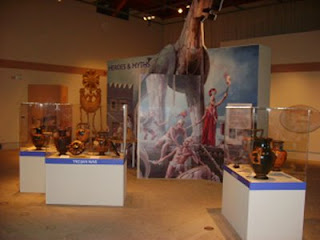
Focussing on war, politics, drama and sport, there is a notable emphasis on red figure pottery, and very little else! A bust of Sophokles, a couple of perfume pots, some miniature statuary and relief carvings, a case of weapons (helmet, greaves, arrowheads, and spear point) and an inscription. Frustratingly (for visitors who lack a Roman emperor's facility with the Greek language), the inscription -- a list of war dead from the Peloponnesian War -- is untranslated. Also, the design of the exhibition -- a few glass cases dotted around a fancifully painted centrepiece -- seems a little uninspired.

Hit or miss?

It is certainly nice to see British Museum artefacts doing the rounds. (The exhibition has already been in South Shields, renowned for its Roman connections.) But an exhibition of this type cannot inspire interest in those who do not already possess it.

Saturday, 31 January 2009

Fly me to the moon ...

Photo (c) NASA/JPL/Space Science InstituteA Roman emperor hunting for a topic to begin a new year naturally seizes upon Janus, the god of doorways.

But did you know that the planet Saturn has a moon named Janus?

This photo, property of NASA, was taken by the Cassini spacecraft in 2006, two years into its 4-year mission.

Truly an amazing image to start the new year.

Sunday, 26 October 2008

Empire and Conflict

British MuseumI couldn't let October slip by without mentioning my illustrious forebear's exhibition at the British Museum in London. Hadrian: Empire and Conflict closed on October 26.

Objects were assembled from 28 museums worldwide, and included the giant sculpture fragments recently unearthed at Sagalassos in Turkey. The Independent trumpeted the "sex, rebellions, wealth and intrigue", while for The Times the exhibition "invites us to speculate on what this most fascinating and complex emperor might really have been like".

British Museum promotional video: http://www.britishmuseum.org/whats_on/all_current_exhibitions/hadrian.aspx

Wednesday, 22 October 2008

What gladiator?

Inscription

So, the tomb of Marcus Nonius Macrinus has been found at Saxa Rubra, north of Rome.

This is the man hailed as the inspiration for the character of Maximus Decimus Meridius in the movie Gladiator. But, needless to say, no Roman senator ever became a gladiator.

Macrinus' career was already well-known from a long Greek inscription found in the ancient city of Ephesus, where his statue must have stood. Catalogued as no. 8830 in Hermann Dessau's Inscriptiones Latinae Selectae, the inscription lists the succession of posts held by Macrinus, first under Antoninus Pius, and then under Marcus Aurelius: tribune of legion XVII (surely a mistake for XVI), legate of legion XIV Gemina, praetorian governor of Lower Pannonia, consular governor of Upper Pannonia, and finally proconsul of Asia. The inscription pointedly refers to him as "general and companion of the greatest emperor Marcus Aurelius Antoninus".

The newly discovered inscription is badly damaged and only a fragment has so far come to light. But it clearly records that Macrinus was comes et legatus imperatoris Antonini Augusti, "companion and legate of the emperor Antoninus Augustus".

Saturday, 16 August 2008

Faustina found!

Faustina

Beautiful, isn't she?

A larger-than-lifesize bust of the empress Faustina, wife of the emperor Antoninus Pius, has just come to light during excavations at Sagalassos in south-west Turkey. For some reason, the Thai Indian News imagined that "archaeologists in Rome" had found the head, but the BBC have the correct location!

Annia Galeria Faustina, surnamed Major ("the Elder") to differentiate her from her homonymous daughter, was born around AD 100, into a patrician family in Spain. She died young in AD 141, whereupon she was deified as Diva Faustina. The charity of the puellae Faustinianae (the "girls of Faustina") was founded in her memory, giving us some insight into this wonderful woman's morality.

Monday, 14 July 2008

A little perspective

Mountain Railway of India

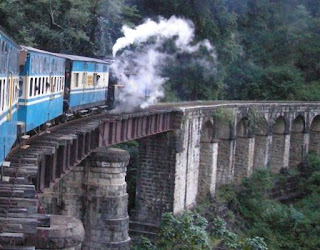
While the UK press has understandably trumpeted the Antonine Wall's success in achieving World Heritage Status (reports appeared, for example, in The Scotsman, The Guardian, The Times, and The Press Association), a glance at the official UNESCO press release reveals that we are just an "extension to an existing property".

How humiliating.

The copy-editors at UNESCO haven't even punctuated us properly! We appear (somewhat breathlessly) as "Mountain Railways of India Paleolithic Cave Art of Northern Spain The Antonine Wall (United Kingdom)". El Pais newspaper understandably chose to emphasize the Palaeolithic Cave Art of Northern Spain, an extension to the Cave of Altamira, inscribed in 1985. And I don't know about the Indian newspapers, but the Philippine Daily Enquirer didn't even mention us at all!

I suppose when you're an old Roman emperor, it's easy to lose perspective.

Tuesday, 8 July 2008

Mission accomplished!

We Win Photo

Wall gains World Heritage Status

Today, the BBC reported the good news: "An ancient fortified wall which formed the north-west frontier of the Roman Empire has been made a World Heritage Site by Unesco." Full report here.

"Falkirk councillor, Adrian Mahoney said: 'Gaining world heritage status is a major achievement and there are so many new opportunities to maximise the benefit to our local area in the future.' But with new opportunities come new responsibilities. This is not the time for resting on laurels.

Thursday, 3 July 2008

Exciting times in Quebec

Duntocher Fort Sign

This week saw the opening of the 32nd Session of UNESCO's World Heritage Committee in Quebec City.

Exciting times for a Roman emperor with a personal interest in the archaeology of Scotland, because The Antonine Wall is the UK's official 2008 nomination for World Heritage Status.

Regular visitors will know that, as the owner and instigator of the Wall, I am an enthusiastic supporter of the bid. (See new "Favorites" sidebar for previous posts on this subject ... mehercule -- it's been a long journey!) But some of the less salubrious sectors of my frontier give me pause for reflection. It would perhaps be a good thing to post a few caretaker garrisons, just to maintain proper decorum; also, they could spend a moment whitewashing the distinctly faded bits (as, for example, in this photo).

The timetable of the 32nd Session of the World Heritage Committee suggests that a decision will be reached on Monday 7 July. I am perched on the edge of my throne ...

Saturday, 28 June 2008

The Birds of Rome

Tacitus calls the legionary standards lost by Varus in AD 9 "the birds of Rome, the guardian spirits of the legions" (Annals 2.17). In a recent post, I suggested that the gathering of eagles found in Matthew's Gospel represented Roman legions, rather than the vultures found in many translations.

So I was gratified to see that precisely the same conclusion was drawn in a scholarly paper which I recently found. In "Are there imperial texts in the class?" (Journal of Biblical Literature vol. 122/3, 2003), the author Warren Carter discusses "Intertextual eagles and Matthean eschatology as 'Lights Out' time for Imperial Rome". He argues that, throughout the Bible, imperial powers function as God's agents in punishing people's sins, and are often envisaged as eagles. If Rome were the imperial power used in this way, a gathering of eagles would be a doubly appropriate symbol, as the birds were already the dominant symbol of Rome.

Finally, Carter argues that Rome was seen as the agent of God's punishment in destroying the Temple at Jerusalem in AD 70. But God uses, then judges and destroys. The scene of the corpse and the eagles gathered together thus represents the final punishment of the punisher.

Uncomfortable reading for an emperor ...