Monday, 14 July 2008

A little perspective

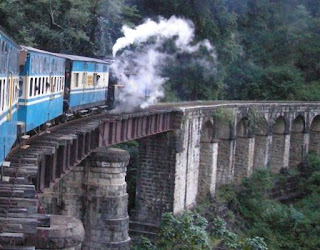
Mountain Railway of India

While the UK press has understandably trumpeted the Antonine Wall's success in achieving World Heritage Status (reports appeared, for example, in The Scotsman, The Guardian, The Times, and The Press Association), a glance at the official UNESCO press release reveals that we are just an "extension to an existing property".

How humiliating.

The copy-editors at UNESCO haven't even punctuated us properly! We appear (somewhat breathlessly) as "Mountain Railways of India Paleolithic Cave Art of Northern Spain The Antonine Wall (United Kingdom)". El Pais newspaper understandably chose to emphasize the Palaeolithic Cave Art of Northern Spain, an extension to the Cave of Altamira, inscribed in 1985. And I don't know about the Indian newspapers, but the Philippine Daily Enquirer didn't even mention us at all!

I suppose when you're an old Roman emperor, it's easy to lose perspective.

Tuesday, 8 July 2008

Mission accomplished!

We Win Photo

Wall gains World Heritage Status

Today, the BBC reported the good news: "An ancient fortified wall which formed the north-west frontier of the Roman Empire has been made a World Heritage Site by Unesco." Full report here.

"Falkirk councillor, Adrian Mahoney said: 'Gaining world heritage status is a major achievement and there are so many new opportunities to maximise the benefit to our local area in the future.' But with new opportunities come new responsibilities. This is not the time for resting on laurels.

Thursday, 3 July 2008

Exciting times in Quebec

Duntocher Fort Sign

This week saw the opening of the 32nd Session of UNESCO's World Heritage Committee in Quebec City.

Exciting times for a Roman emperor with a personal interest in the archaeology of Scotland, because The Antonine Wall is the UK's official 2008 nomination for World Heritage Status.

Regular visitors will know that, as the owner and instigator of the Wall, I am an enthusiastic supporter of the bid. (See new "Favorites" sidebar for previous posts on this subject ... mehercule -- it's been a long journey!) But some of the less salubrious sectors of my frontier give me pause for reflection. It would perhaps be a good thing to post a few caretaker garrisons, just to maintain proper decorum; also, they could spend a moment whitewashing the distinctly faded bits (as, for example, in this photo).

The timetable of the 32nd Session of the World Heritage Committee suggests that a decision will be reached on Monday 7 July. I am perched on the edge of my throne ...

Saturday, 28 June 2008

The Birds of Rome

Tacitus calls the legionary standards lost by Varus in AD 9 "the birds of Rome, the guardian spirits of the legions" (Annals 2.17). In a recent post, I suggested that the gathering of eagles found in Matthew's Gospel represented Roman legions, rather than the vultures found in many translations.

So I was gratified to see that precisely the same conclusion was drawn in a scholarly paper which I recently found. In "Are there imperial texts in the class?" (Journal of Biblical Literature vol. 122/3, 2003), the author Warren Carter discusses "Intertextual eagles and Matthean eschatology as 'Lights Out' time for Imperial Rome". He argues that, throughout the Bible, imperial powers function as God's agents in punishing people's sins, and are often envisaged as eagles. If Rome were the imperial power used in this way, a gathering of eagles would be a doubly appropriate symbol, as the birds were already the dominant symbol of Rome.

Finally, Carter argues that Rome was seen as the agent of God's punishment in destroying the Temple at Jerusalem in AD 70. But God uses, then judges and destroys. The scene of the corpse and the eagles gathered together thus represents the final punishment of the punisher.

Uncomfortable reading for an emperor ...

Tuesday, 27 May 2008

Mists of antiquity, fog of scholarship

A brief notice (at 200 words, it's hardly long enough to qualify as an article) in the Times Online caught my eye this week. It has the rather convoluted title, Romans and a Link to Egypt - but Scots came from Ireland, a title so lengthy as to account for a fair percentage of the word count! I was amused to see that the author, Magnus Linklater, manages to work in a reference to our own dear Ninth Legion in his first paragraph!

"The earliest written accounts [of Scotland] are to be found in the works of the Roman historian Tacitus, whose father-in-law invaded southern Scotland with the 9th Roman Legion in 81 AD."

Okay, the father-in-law, Gnaeus Julius Agricola, did invade southern Scotland, but may not have been the first to do so. Archaeologists are more and more inclined to expand the role of his predecessor-but-one, Quintus Petillius Cerialis, to include a certain amount of ravaging in the Lowlands. Nor was it just the Ninth Legion that accompanied Agricola. Britannia was a four-legion province, after all. And by limiting his involvement to southern Scotland, Mr Linklater does his memory a grave injustice.

But that's only Mr Linklater's first paragraph. Here's his second:

"At that time Scotland was inhabited by tribes of Celtic origin, notably the Picts, about whom very little is known but who left behind many distinctive stone carvings."

Notably the Picts? Well, we've already scotched (ouch!) that factoid. But, from Agricola and the Ninth Legion, Mr Linklater has effortlessly drawn us onto the subject of the Picts. Where will he go next?

"Around the 6th century, the Picts converted to Christianity and some of their carvings show links with the Middle Eastern Coptic church. This image [what image?!] of two hands receiving a loaf of bread from a raven, depicts StAnthony and StPaul the Hermit in the desert. It is found on a monastery wall in Egypt and a Pictish stone at St Vigeans, Dundee."

Egypt?! Is Mr Linklater subtly suggesting a link between Pictish Dundee and monastic Egypt? I'm afraid we'll never know because, in the next paragraph, his final one, he's off on another tangent.

"Originally referred to as Alba or Alban, the name Scotland is said to derive from the Scots, a warlike Celtic race from Northern Ireland who invaded southwestern Scotland in the 3rd and 4th centuries and established the kingdom of Dalriada."

Mr Linklater should perhaps have pointed out that the Scotti (for it is they to whom he alludes!) are first mentioned in the 4th century (not the 3rd) and that the evidence for Dalriada is even later.

And that's it. A frustratingly teasing promise of Romans in Egypt that ends with an enigmatic early Scottish kingdom. Not with a bang but with a whimper ...

Tuesday, 13 May 2008

The long-awaited legion

Silchester Eagle

Ever since 30 November 2003, when I read that Rosemary Sutcliff's Eagle of the Ninth was finally to be filmed, I have been intending to re-read that childhood classic. As the title suggests, the Ninth Legion certainly lurks in the background, but if I were asked to sum up the central theme in one sentence, I would not have said: "the Picts slaughter most of the invaders, but a few survivors attempt to fight their way back"! But this seems to be the premise of the proposed movie.

The theme of the book that I recalled from childhood was quite different. And a re-reading confirmed my hazy memory.

Above all, I was struck by Miss Sutcliff's debt to Rudyard Kipling (which I had not noticed thirty years ago). Of course, in today's world of web and wiki, it is easy to discover that she had a life-long interest in Kipling, culminating in the writing of a biography (long out of print). The most striking parallel for me is the little turf altar that Marcus builds in Chapter 11, because it is surely an echo of a scene sketched by Kipling in Puck of Pook's Hill.

"Wait awhile,” said Pertinax, and he made a little altar of cut turf, and strewed heather-bloom atop, and laid upon it a letter from a girl in Gaul.
"What do you do, O my friend?” I said.
"I sacrifice to my dead youth,” he answered, and, when the flames had consumed the letter, he ground them out with his heel. Then we rode back to that Wall of which we were to be Captains.

Other readers will notice other echoes of Kipling in Miss Sutcliff's prose. But, unfortunately, she seems to have used him as a historical source, too. That is clearly where she gets the mistaken idea that the lands of the Selgovae and Votadini, in the hinterland of the Antonine Wall, were the province of Valentia. And that Agricola had built a northern wall. And other minor points, besides.

But it would be churlish to criticise a novel of 1954 for misrepresenting an archaeology that, fifty years on, is still in parts obscure. And not even a grumpy emperor can find fault with sublime prose like this (Marcus' farewell to the ex-centurion who has "gone native"):

They looked back when they had gone a few paces, and saw him standing as they had left him, already dimmed with mist, and outlined against the drifting mist beyond. A half-naked, wild-haired tribesman, with a savage dog against his knee; but the wide, well-drilled movement of his arm as he raised it in greeting and farewell was all Rome. It was the parade-ground and the clipped voice of trumpets, the iron discipline and the pride. In that instant Marcus seemed to see, not the barbarian hunter, but the young centurion, proud in his first command, before even the shadow of the doomed legion fell on him. It was to that centurion that he saluted in reply.
Then the drifting mist came between them.

I wonder if the film will manage to capture that pathos, and I worry ...
Wednesday, 16 April 2008

Order and tranquillity

"If a man were called to fix the period in the history of the world during which the condition of the human race was most happy and prosperous, he would, without hesitation, name that which elapsed from the death of Domitian to the accession of Commodus. The vast extent of the Roman empire was governed by absolute power, under the guidance of virtue and wisdom. "

So wrote Edward Gibbon in Book 1, Chapter 3, of his History of the Decline and Fall of the Roman Empire. A correspondent recently asked about the two sons of Antoninus Pius, quoting Gibbon's comment (from the same chapter), that "without the help of medals and inscriptions, we should be ignorant of this fact".

Family tree of Antoninus Pius

Gibbon knew (from the Historia Augusta's Vita Antonini Pii) that Antoninus had two sons. But he seems to have overlooked the remark made by Cassius Dio (69.21), that when Antoninus became emperor he had no male offspring. Gibbon implies that, for noble reasons, Antoninus passed over both sons in favour of adopting the future emperor Marcus Aurelius. However, it seems preferable to imagine that both sons had died prior to AD 138.

How do we know of their existence? The same correspondent helpfully directs us to the WildWinds Roman Imperial Coinage web site, where a selection of coins (Gibbon's "medals") can be viewed commemorating the young Marcus Galerius Aurelius Antoninus. The coins were struck later than AD 140, because they principally commemorate the deified wife of Antoninus, who died in that year. Perhaps the provinces had kept the memory of young Galerius alive.

As for his brother, by good fortune, a pair of inscriptions from the Mausoleum Hadriani (later converted into the Castel Sant'Angelo) mention both M Galerius Aurelius Antoninus filius Imp Caesaris Titi Aelii Hadriani Antonini Aug Pii p p ("Marcus Galerius Aurelius Antoninus, son of the emperor Titus Aelius Hadrianus Antoninus Augustus Pius, father of his country": ILS 351) and his brother M Aurelius Fulvus Antoninus filius Imp Caesaris T Aelii Hadriani Antonini Aug Pii p p ("Marcus Aurelius Fulvus Antoninus, son of the emperor Titus Aelius Hadrianus Antoninus Augustus Pius, father of his country": ILS 350). These are surely the inscriptions to which Gibbon refers.

Monday, 14 April 2008

To the Mother Goddesses

Roman altar from ManchesterA new Roman inscription turned up in Manchester (England) this month. Before you get too excited, there were no traces of paint on the inscription (as far as I know): the red lettering is mine, to make it easier to read.

The inscription is a Roman altar, set up by a man called Aelius Victor (whose name occupies lines 5 and 6). Altars were part and parcel of the Roman religious mindset. They were designed as small, free-standing, squared-off columns, some three, four or five feet tall (1.0-1.5 m), with a shallow depression on top. Here the dedicator would offer his or her offering.

I vow to thee ...

The altar itself represents a personal contract between the dedicator (in this case, Aelius Victor) and the deity or deities whom he had invoked. Usually, the dedicator requested some favour of the gods -- safe passage, perhaps, or a successful crop -- and promised to set up an altar in gratitude for a favourable outcome.

The abbreviation on the last line -- V.S.L.L.M. -- is commonly found on altars, and indicates that the dedicator votum solvit laetus libens merito ("fulfilled his vow gladly, willingly and deservedly"). Aelius Victor was thanking the gods for whatever favour he had requested, and was keeping his end of the bargain by setting up the promised altar.

In fact, he was thanking goddesses, for the altar was erected Deabus Matribus Hananeftis et Ollototis ("To the Mother Goddesses Hananeftae and Ollototae"). The Ollototae are previously known from Roman Britain. They are thought to be Germanic goddesses whose name means "of all folk", and their function was presumably a protective one. But exactly why Aelius Victor might have sought their aid remains a mystery.

(I confess that I have never heard of the Hananeftae. Please leave a comment if you can shed any light on them.)

Friday, 11 April 2008

Decline and Fall

Gibbon's Decline & Fall. Title page of volume 1Today, I spent a pleasant hour enjoying the sonorous prose of Gibbon's Decline and Fall.

My own principate is described thus:
"The restless activity of Hadrian was not less remarkable when compared with the gentle repose of Antoninus Pius. The life of the former was almost a perpetual journey; ... But the tranquil life of Antoninus Pius was spent in the bosom of Italy; and, during the twenty-three years that he directed the public administration, the longest journeys of that amiable prince extended no farther than from his palace in Rome to the retirement of his Lanuvian villa."

Quite so.

(Incidentally, while seeking a suitable picture for this post, I discovered a useful resource in the Dusty Shelf web site's archive of antiquarian texts. Sadly, the site appears to have been abandoned before Rice Holmes was uploaded. The Questia web site seems to charge a subscription for access to this public domain text!)

Friday, 4 April 2008

Detrimental Classics

I can only assume that it was an April Fool.

This week, the Telegraph newspaper's web site carried a report, filed late on 31 March (11;35pm), entitled "Classics harm language learning"! According to the article, "A secret document sent to Government officials by the Dearing Languages Review, an influential inquiry into language teaching, reveals that Latin and Greek were excluded from the list of languages that schools will be encouraged to study because they are 'dead languages' that contribute nothing to 'intercultural understanding'." Furthermore, they were deemed to "actually undermine our attempts to build up national capacity in languages".

Bizarre. Or as Boris Johnson, the shadow higher education minister, was quoted as saying: "the most stupid thing I have ever heard". Quite.